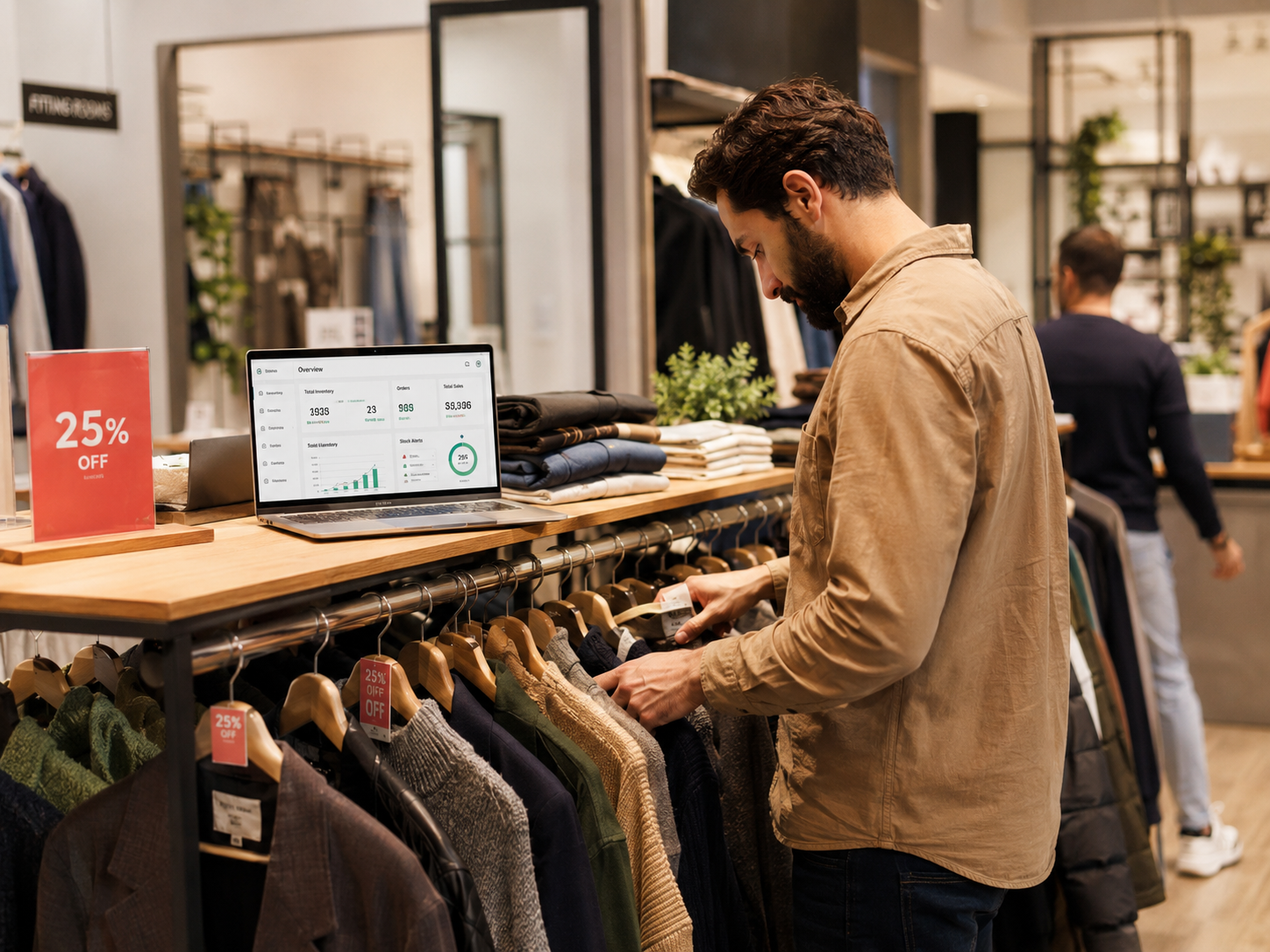


Retail gets easier to run when inventory, tasks, sales, and store teams stop working in separate systems.
A store does not fall behind only because sales are slow. Sometimes the real trouble is quieter. Stock is available in one system, missing in another, and still visible online. A return reaches the warehouse, but customer support cannot see it. A store manager edits a promotion locally, while the website keeps the old price. Finance waits for daily numbers. The team knows the work is moving, but it does not move cleanly.
That is where a retail operations platform starts to become useful. Not as another dashboard. Retailers already have plenty of dashboards. A good retail operations platform gives stores, e-commerce, warehouse, finance, service, and leadership one operating path for the daily work that decides customer trust.
Retail is more connected than it was even 5 years ago. The U.S. Census Bureau’s Quarterly Retail E-Commerce Sales Report, Q1 2026, said U.S. retail e-commerce sales reached $302.3 billion on a not-adjusted basis, up 9.7% from Q1 2025, and accounted for 16.8% of total retail sales. That volume creates more order changes, stock movements, refunds, pickup requests, and fulfillment choices for teams to handle without confusion.
What Is A Retail Operations Platform?
A retail operations platform is the connected system layer that helps a retailer manage daily store and digital operations from one flow. It usually connects inventory, POS, order handling, staff tasks, promotions, customer service, returns, fulfillment, reporting, and business rules.
The simple version is this: it helps people stop chasing updates.
Store teams should not call the warehouse 8 times to check whether stock has moved. E-commerce teams should not wait for a spreadsheet to know whether an online order can be shipped. Customer service should not ask customers to repeat the same order details because the ticketing tool and order system do not agree.
That is why retail operations technology has become more important than single-purpose tools. A stock app helps with stock. A POS helps with checkout. A WMS helps with warehouse movement. But the gaps between these systems create the trouble. A retail operations platform works best when it connects those daily handoffs instead of leaving every team to manage its own version of truth.
Why Retail Operations Technology Keeps Becoming Harder To Manage
Retailers do not usually start with messy systems. They collect them over time.
One tool comes in for POS. Another for e-commerce. Another for loyalty. Then a marketplace connector. Then, a delivery partner portal. Then a returns app. Each one solves a real need at the time. But after a while, store managers, operations heads, and finance teams are left working through tool fatigue.
This is where retail operations technology becomes an operations decision, not just an IT decision. A team may have good software and still run poorly because the software does not share clean data quickly enough.
A useful retail operations platform should help with:
- stock visibility across stores, warehouses, e-commerce, and returns
- staff task control, approvals, promotions, refunds, transfers, and exception handling
That second point is often ignored. Retail leaders talk about inventory first, and they should. But the people layer is just as important. A store team needs to know what to do next, who approved it, what changed, and which issue needs escalation.
The UK Office for National Statistics’ Retail Sales, Great Britain: May 2026, reported that online sales rose from 28.1% of retail sales in April 2026 to 28.8% in May 2026. When online share stays that high, store and online teams cannot afford slow handoffs between systems.
Core Retail Operations Platform Features Retailers Should Check
A retail operations platform should be judged by what it fixes during a normal trading week. Not by feature count. Not by how modern the interface looks in a demo.
Inventory Visibility Across Every Channel
Inventory is where many retail problems start. The last unit in a store gets sold, but the website still shows it as available. A return is accepted but not restocked. A transfer is in transit, yet the planning report treats it as sellable.
A strong retail operations platform should show stock status across physical stores, e-commerce, marketplaces, warehouse locations, damaged stock, reserved stock, and in-transit stock. It should also show why the stock changed. That one detail saves a lot of back-and-forth.
If your retail team is already fighting stock mismatches, our take on inventory optimization solutions for retail explains why better system handoffs matter before forecasting tools can do useful work.
Order Management That Does Not Leave Teams Guessing
Modern orders are rarely simple. Buy online, pick up in store. Ship from store. Split shipment. Partial cancellation. Exchange after delivery. Return to a different location. Refund after quality check. Every step needs a status, owner, rule, and timestamp.
A retail operations platform helps teams see where an order stands without checking three systems. It should also support exceptions. For example, if an item cannot be picked, who gets alerted? If a customer changes delivery details, where does that update travel? If a store rejects a pickup order because the stock is damaged, how fast does the website know?
This is the small daily work that shapes customer experience.
Store Operations Management With Fewer Manual Checks
Store work is not only sales. Staff handles opening checks, visual merchandising, stock counts, refunds, local promotions, repairs, pickup orders, customer complaints, and compliance tasks. When all of this sits in WhatsApp groups, paper notes, email trails, and separate apps, managers lose visibility.
A retail operations platform should help assign tasks, track completion, capture proof, flag delays, and create a store-level history. This is where store operations management becomes easier to supervise without turning every manager into a manual reporter.
CTA: Need A Retail Operations Platform Your Store Teams Can Actually Use?
Build connected retail operations technology with Hubops to bring inventory, orders, staff tasks, and daily store workflows into one cleaner operating path.
How A Retail Operations Platform Helps Omnichannel Retail
Omnichannel retail sounds neat in strategy decks. On the floor, it is messy.
A customer sees a discount online, visits the store, and expects the same offer. Another customer orders from the app and wants pickup in 2 hours. A third returns an online purchase in-store and wants an immediate refund. The brand sees one customer. The systems often see separate events.
A retail operations platform helps tie those events together. It gives teams one way to process channel activity, instead of treating store, e-commerce, marketplace, and service as separate lanes.
Eurostat’s E-Commerce Statistics for Individuals reported that 78% of EU internet users bought online in 2025, up from 62% in 2015. That kind of buying behavior means retail operations cannot stay store-first in the back office while customers shop across channels.
For retailers trying to connect systems without replacing everything at once, unify disconnected software systems without replacing your core stack is a useful route. The better path is often a staged connection, not a risky full rebuild.
Where Retail Operations Platforms Usually Fail
The platform itself is not always the problem. Implementation is.
Retail teams often buy a tool before they clean their processes. Then the platform inherits the mess. Product names differ by channel. SKU rules are unclear. Refund approval varies by store. Staff roles are not defined. Pricing ownership changes depending on who is available that week.
A retail operations platform cannot repair unclear ownership by magic. It needs rules.
Retailers should ask a few plain questions before they build:
- Who owns product data, price changes, stock status, refund rules, and customer records?
- Which workflow causes the most customer complaints, and which system slows it down?
These questions may feel basic. They are not. They decide whether the platform becomes a working control layer or just another login.
This is also where Hubops can support through consulting services, where our work connects technology planning with people, workflows, operating design, and change support. A retail system is only useful when teams can use it during busy days, not only during training.
Why Cloud and SaaS Planning Matter for Retail Operations Platforms
A retail operations platform depends on uptime, speed, access control, and reliable data movement. During peak sale periods, even a small delay can create order errors. During festival demand, slow stock syncing can create overselling. During returns season, weak data flow can flood support teams.
That is why cloud and SaaS planning should not be treated as background IT work. It affects store execution.
Hubops supports this through cloud & saas services, where our work covers hybrid cloud strategy, SaaS optimization, cloud security, managed cloud, and migration planning. For retail teams, this can help reduce tool sprawl, improve platform stability, and support safer growth.
The European Commission’s Digital Decade target says that by 2030, 3 out of 4 EU companies should use cloud computing services, big data, or artificial intelligence, while more than 90% of SMEs should reach at least basic digital intensity. Retailers planning a retail operations platform today should keep that 2030 direction in view.
What Hubops Looks At Before Building A Retail Operations Platform
At Hubops, we usually start with the flow of work, not the software wish list. A retail operations platform should be shaped around what teams do every day.
We look at how orders move from checkout to fulfillment. We check how stock is reserved, sold, returned, damaged, transferred, and counted. We review store approvals, service tickets, promotion rules, reporting gaps, and exception handling. Then we decide what needs to connect, what needs to change, and what can stay.
This avoids a common mistake. Some retailers replace too much too fast. Others patch too little and keep the pain alive. The better route is usually phased. Fix the workflows that hurt customers first. Then move toward stronger automation, cleaner reporting, and better planning.
A retail operations platform should also make room for future use cases: AI-assisted replenishment, smarter allocation, workforce planning, automated refunds, local demand signals, and loyalty-led personalization. But those advanced features need clean foundations. Without that, the platform produces faster confusion.
CTA: Want Retail Operations Technology Built Around Daily Work?
Connect store, e-commerce, warehouse, service, and finance workflows with Hubops so your retail operations platform supports teams where delays actually happen.
Final Thoughts
A retail operations platform is not just a system purchase. It is a decision to run retail with fewer blind spots.
The best platform helps store staff trust the numbers, e-commerce teams trust availability, finance teams trust reports, and customers trust the brand after the sale. It reduces the hidden drag caused by manual updates, unclear ownership, slow approvals, and disconnected retail operations technology.
Retail will only get more connected. Stores will keep supporting digital journeys. Online channels will keep shaping stock decisions. Customers will keep expecting fast answers. A good retail operations platform gives retailers a stronger base for that pressure.
At Hubops, we build that base around actual operations, not software noise. That is where better retail execution begins.
FAQs
What is a retail operations platform?
A retail operations platform connects store, e-commerce, inventory, order, staff, return, service, and reporting workflows in one operating flow.
Why do retailers need retail operations technology?
Retailers need retail operations technology to reduce manual updates, stock errors, slow handoffs, delayed reporting, and poor customer visibility.
How does a retail operations platform improve inventory control?
It connects stock updates across stores, warehouses, online channels, transfers, returns, damaged goods, and reserved inventory.
Can a retail operations platform support omnichannel retail?
Yes. It helps stores, e-commerce, marketplaces, service teams, and fulfillment teams work from shared order and stock data.
How should retailers start platform planning?
Start by mapping daily workflows, data ownership, customer pain points, store tasks, order exceptions, and reporting gaps.