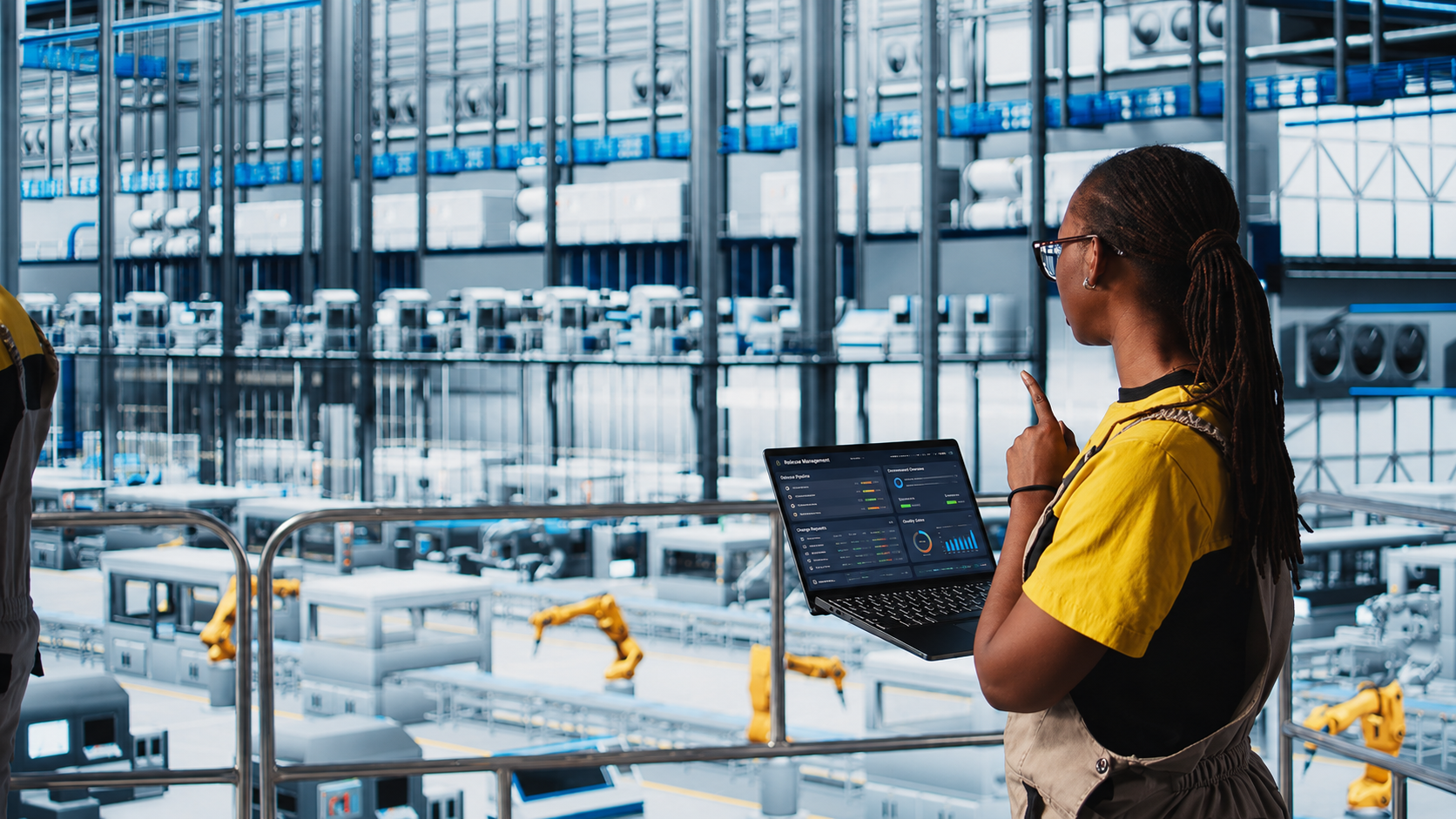


Streamline manufacturing releases with DevOps platforms that connect plant IT, security, and software teams.
DevOps Platforms For Manufacturing Release Management
A production line can be running at full speed while the software team is still waiting for a three-day approval to move one small change into production. That gap is where many manufacturing technology programs start to drag.
Factories now depend on software for maintenance, quality, warehouse movement, scheduling, machine data, supplier coordination, and digital twins. Yet delivery is often split across development, plant IT, security, and operations. One group works in tickets. Another uses spreadsheets. A plant engineer may still request a release through email because the deployment path feels risky.
A DevOps platform manufacturing industry strategy should shorten that distance. It brings code, testing, deployment, infrastructure, security checks, monitoring, and release history into a repeatable path. It also gives plant teams more control over what changes, when it changes, and how quickly it can be rolled back.
Factories should not chase deployment speed for its own sake. A consumer app can tolerate a failed feature flag. A production cell may not. The goal is safer delivery with fewer handoffs and less dependence on one person knowing how a release works.
Why DevOps Platform Manufacturing Industry Strategies Are Growing
Manufacturing software now stretches far beyond ERP. Production data moves between MES, quality systems, cloud services, APIs, machine gateways, supplier portals, and analytics tools. Every new connection adds another release path that can interrupt operations if change control is weak.
UNIDO’s World Manufacturing Production and Trade Report in Q4 2025, published in March 2026, found that global manufacturing production increased 0.50% quarter over quarter, while manufacturing exports rose 1.7%. Higher-technology exports grew 2.6%. The numbers show how much industrial growth is leaning toward technology-heavy sectors where software delivery is part of plant performance.
A DevOps platform manufacturing industry program gives manufacturers a way to handle that software load without turning every release into a custom project.
Where Traditional Manufacturing Software Delivery Breaks
The failure points are usually ordinary. A developer commits code, but the test environment does not match production. A configuration file lives on one engineer’s laptop. The plant team receives release notes after the change is already scheduled. Security testing happens near the end. A rollback script exists, but nobody has used it in six months.
Teams often compensate with bigger change windows and more manual approvals. That can look safe, but risk simply accumulates in larger batches. Smaller changes are easier to test, trace, approve, and reverse.
What A DevOps Platform Manufacturing Industry Setup Should Include
A useful platform does not have to be one huge product. It can be a controlled delivery system built from tools the team already uses, provided ownership is defined.
The core pieces usually include:
- source control, pull requests, and branch policies
- automated build, test, security, deployment, and rollback steps
- artifact and container registries with approved version histories
- infrastructure as code for repeatable environments
- secrets management, access policies, and audit logs
- monitoring that connects application behavior with plant impact
A DevOps platform manufacturing industry design should also show who can approve a plant release, which systems are excluded from automated deployment, and what happens when an OT dependency is unavailable.
CI/CD For Manufacturing Needs Plant-Aware Release Rules
CI/CD for manufacturing needs release gates based on operational risk. A reporting dashboard may deploy during business hours. A change touching MES-to-machine communication may require a maintenance window, plant engineer, rollback check, and production validation. The pipeline can enforce those differences.
That is the real benefit of a DevOps platform manufacturing industry approach. The platform stores the rules instead of leaving them in somebody’s memory.
Manufacturers working across plants, process assets, and highly controlled operational environments face similar release problems outside discrete production too. Our oil and gas digital transformation work shows how industrial data, automation, asset reliability, and operational software have to move together rather than as separate IT projects.
Manufacturing Automation Works Better With Reliable Software Delivery
Manufacturing automation can fail because an orchestration service is outdated, a dependency changes, a certificate expires, or a connector breaks after an update. The software around automation needs the same attention as the equipment.
A DevOps platform manufacturing industry team can connect automated testing to production interfaces. A pipeline can verify MES messages, machine-data schemas, and API fields before a quality or warehouse workflow is affected.
OECD data released in January 2026 reported that 20.2% of firms across countries with available data used AI in 2025, up from 14.2% in 2024. AI use among large firms reached 52%. As more manufacturers add AI to scheduling, maintenance, inspection, and engineering workflows, the software release path behind those systems becomes harder to treat as an afterthought.
DevOps Platform Manufacturing Industry Teams Need OT And IT Boundaries
One mistake is applying a standard SaaS DevOps model directly to factory technology.
Plant systems have different tolerance for downtime. Some machines run for years with tightly controlled versions, while vendor support may depend on specific firmware or drivers. Safety-related controls can require separate validation.
Keep delivery automated where it reduces human error, but retain human approval where plant context is required. Isolate networks, use signed artifacts, record production changes, and test rollback before the release window.
That approach also applies in regulated engineering environments. Our aviation technology solutions work covers predictive maintenance, operational platforms, connected data, and other systems where software changes cannot ignore availability and safety.
CTA: Are Factory Software Releases Still Taking Too Many Manual Steps?
Build a DevOps platform manufacturing industry roadmap with Hubops that standardizes CI/CD, secures release pipelines, and reduces fragile handoffs across plant and enterprise teams.
Security Inside A DevOps Platform Manufacturing Industry Model
Manufacturers often secure production networks carefully while leaving the software delivery chain with older habits. Shared service accounts, long-lived credentials, unmanaged packages, and broad repository access can undermine everything downstream.
Manufacturing Dive, reporting on IBM’s 2026 X-Force Threat Intelligence Index, said manufacturing accounted for 27.7% of observed cyberattacks in 2025, the highest share of any industry in the report. Exploitation of public-facing applications caused 32% of observed manufacturing breaches. That puts software delivery security directly beside plant network security priorities.
A DevOps platform manufacturing industry security model should pull checks earlier into development. Static code analysis, dependency scanning, secret scanning, image scanning, policy checks, and signed artifacts can happen before a release reaches the plant.
This is where DevSecOps becomes useful. Developers see security failures while they can still fix them, and security teams get evidence without chasing screenshots before an audit.
For teams adding AI services, machine identities, or autonomous workflows, our discussion of why security, data sovereignty, and AI readiness now go together is relevant because access, data location, governance, and audit trails increasingly need to be designed together.
Protect The Software Supply Chain
Manufacturers run open-source libraries, container images, vendor packages, plugins, and third-party actions alongside their own code. A DevOps platform manufacturing industry program should record component origin and production versions. Software bills of materials, approved registries, and package controls can help.
The payoff is faster response when a dependency becomes vulnerable. Teams should be able to identify affected applications, rebuild them, test the patch, and track deployment without calling plants to ask what version they run.
How To Roll Out DevOps Platform Manufacturing Industry Changes
The worst rollout starts with a platform purchase and only later asks plants how they work. Start with one delivery path that already causes frustration, perhaps a maintenance application, quality dashboard, internal API, or reporting service. Map the release from commit to production and count approvals, manual steps, and rollback gaps. Do not begin with the most safety-sensitive system. Prove the model somewhere useful but recoverable, then extend it.
A practical rollout can focus on two early moves:
- standardize source control, build steps, test evidence, artifact storage, and deployment records for one application group
- create reusable pipeline templates so the second and third teams do not rebuild the same controls from scratch
Manufacturing automation teams should be involved early. They know where software dependencies touch equipment, shift schedules, maintenance windows, or vendor support rules.
Add AI And Agentic Automation Only After Delivery Controls Work
AI can review logs, summarize failed builds, recommend tests, and help with incident triage. But autonomy without permissions, audit history, and rollback control is a bad trade inside a factory.
The Hubops whitepaper on architecting the agentic AI era to unlock the autonomy dividend discusses secure development lifecycles, machine identity, runtime controls, and governance for autonomous workflows. Those ideas fit manufacturing DevOps because automated agents still need boundaries around what they can change.
A DevOps platform manufacturing industry program should treat AI as another participant in the delivery chain. Give it scoped access. Log actions. Require human review for higher-risk releases. Do not give an agent broad plant credentials because the demo looked good.
Cloud Cost And Compute Planning For Manufacturing DevOps
Factories are adding cloud workloads for analytics, simulation, AI, remote monitoring, and software delivery. CI/CD can become expensive when build agents run constantly or duplicate environments stay active.
The IEA’s Energy and AI report projects global data-center electricity consumption to reach around 945 TWh by 2030, roughly double current levels in its base case. It expects accelerated servers, largely driven by AI adoption, to be a major source of that increase.
A DevOps platform manufacturing industry plan should therefore track compute as well as deployment speed. Shut down temporary test environments. Cache dependencies. Reduce unnecessary rebuilds. Set retention policies for artifacts and logs. Keep heavy simulation workloads separate from routine CI jobs where possible.
Those choices add up across hundreds of pipelines and several plants.
Measuring A DevOps Platform Manufacturing Industry Program
The dashboard should not stop at deployment frequency. Manufacturing leaders need to know whether software delivery is becoming less disruptive. Track failed deployment rate, rollback time, lead time for changes, time spent waiting for approval, escaped defects, unplanned plant impact, security findings, and repeated manual steps.
A DevOps platform manufacturing industry program is working when teams can make smaller changes without creating more operational noise.
Watch adoption too. If developers bypass templates or plant engineers keep parallel spreadsheets, the workflow is probably missing something they need. The platform should remove work, not add another administrative layer. That is the standard a DevOps platform manufacturing industry program should meet.
CTA: Need A Safer Path From Code Commit To Factory Production?
Work with Hubops to build a DevOps platform manufacturing industry delivery model that connects development, security, infrastructure, and plant operations without forcing risky release changes.
Final Thoughts
A factory does not become software-driven because it bought more software. The change happens when digital systems can be updated, secured, monitored, and recovered without turning every release into a plant-wide event.
That is where a DevOps platform manufacturing industry approach earns its place. It gives development teams a repeatable path, gives security teams better evidence, and gives operations teams more control over when changes touch production.
Start with one painful release flow. Fix the handoffs. Automate what is safe to automate. Keep operational approvals where they are needed. Then expand the pattern.
Hubops helps manufacturers build safer, repeatable delivery foundations across every plant.
FAQs
What is a DevOps platform for manufacturing?
It is a controlled software delivery environment that combines code, testing, security, deployment, monitoring, and release records for manufacturing systems.
How does DevOps support manufacturing automation?
DevOps helps teams test, release, monitor, and roll back the software that connects automated production, data, quality, and maintenance workflows.
Can DevOps be used with OT systems?
Yes, but OT releases need stricter access rules, plant-aware approvals, tested rollback plans, network separation, and vendor support checks.
Which manufacturing applications should move to DevOps first?
Start with software that changes often, causes manual release work, and can be recovered without interrupting safety-sensitive production.
How does Hubops help manufacturing teams adopt DevOps?
We assess delivery paths, design CI/CD controls, secure pipelines, automate infrastructure, improve monitoring, and phase rollout around plant operating requirements.